SoftBank Seeks $100 Billion AI Fund to Overhaul Legacy Firms
SoftBank pursues a $100 billion AI fund backed by Middle Eastern wealth, aiming to buy low-tech enterprises and rebuild them with robotics and automation.
SoftBank pursues a $100 billion AI fund backed by Middle Eastern wealth, aiming to buy low-tech enterprises and rebuild them with robotics and automation.
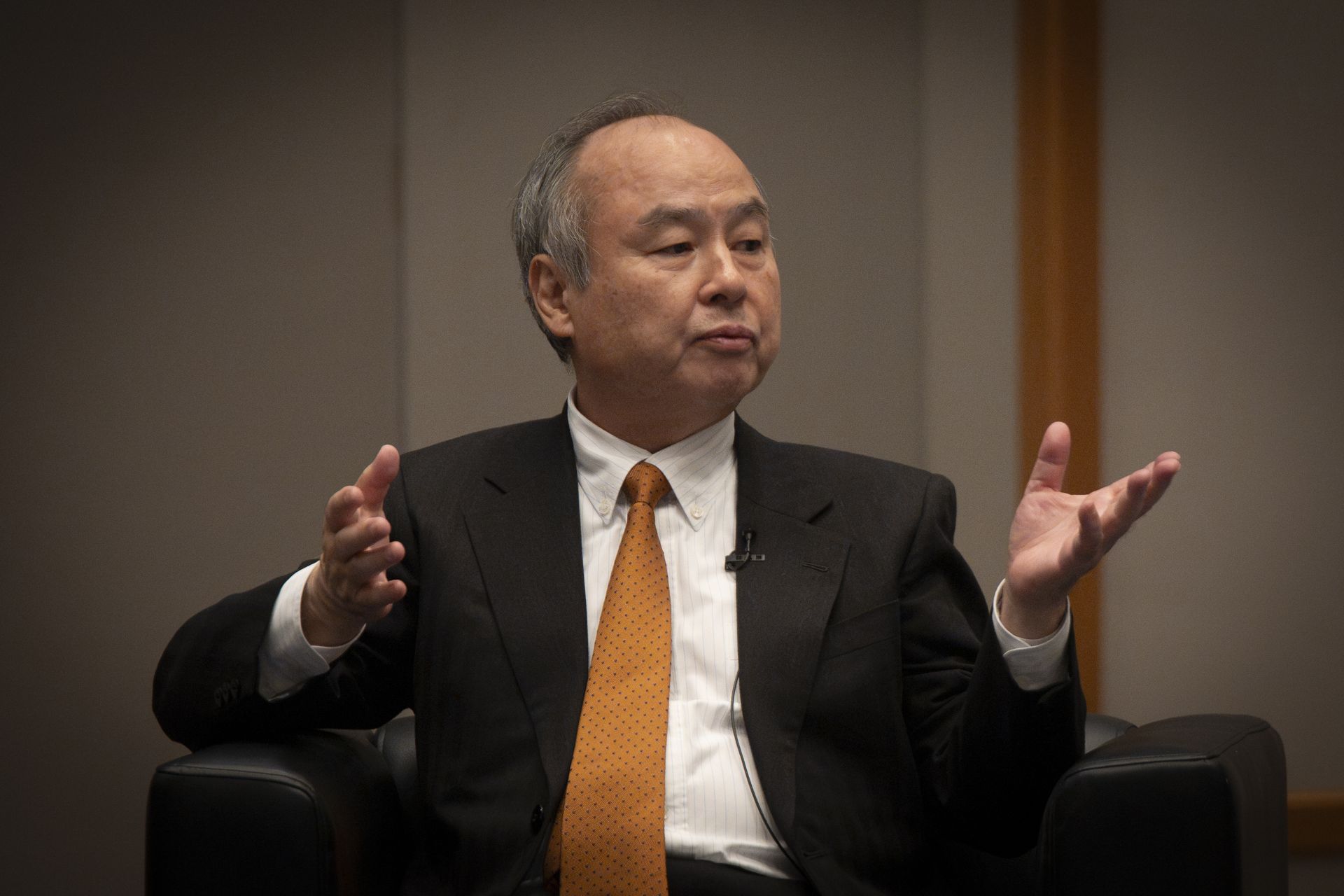
Masayoshi Son is once again assembling the financial machinery for a gargantuan private equity gambit. SoftBank Group is reportedly laying the groundwork for a new investment vehicle targeting up to $100 billion from Middle Eastern sovereign wealth funds. Yet unlike the freewheeling days of the initial Vision Fund—which showered billions on asset-light consumer software platforms—this initiative takes an industrial, boots-on-the-ground approach. Under the proposed strategy, the SoftBank $100 billion AI fund would acquire mature companies running traditional, low-tech operations and systematically rebuild them around modern robotics, autonomous logistics, and machine learning pipelines.
According to people familiar with the discussions, SoftBank has pitched sovereign wealth entities in Saudi Arabia and the United Arab Emirates, including the Public Investment Fund (PIF) and Abu Dhabi’s Mubadala-affiliated investment arms. Rather than chasing inflated valuations in early-stage frontier AI research labs, the vehicle seeks to exploit a widening valuation gap: traditional manufacturing, warehousing, distribution, and infrastructure companies frequently trade at single-digit earnings multiples simply because their workflows remain anchored in manual labor and legacy enterprise software. By modernizing these operations through physical automation and predictive algorithms, SoftBank aims to expand operational margins and command high-multiple technology exits.
How the SoftBank $100 Billion AI Fund Targets Legacy Operations
The financial logic mirrors traditional leveraged buyout (LBO) mechanics, but with an aggressive technological overhaul substituting for standard debt restructuring. When a private equity sponsor acquires an industrial or logistics distributor, the playbook typically focuses on headcount optimization, supply-chain renegotiation, and balance sheet financial engineering. Son’s proposed model bets that physical automation delivers far steeper margin expansion than conventional cost-cutting.
Industrial brownfield sites—existing manufacturing plants, regional distribution hubs, and commercial fleet facilities—are notoriously difficult to automate incrementally. Legacy enterprise resource planning (ERP) systems, disjointed inventory trackers, and proprietary programmable logic controllers (PLCs) often prevent off-the-shelf software tools from delivering meaningful productivity gains. For mid-market companies generating hundreds of millions in revenue, the upfront capital expenditure required to install automated guided vehicles (AGVs), articulated robotic arms, and end-to-end computer vision inspection networks is prohibitively risky.
SoftBank intends to absorb that friction by acquiring majority control. Once insulated from public market scrutiny or short-term private equity debt milestones, the target companies will undergo structural re-engineering. Warehouse sorting shifts from manual picking to automated multi-tier storage and retrieval systems; fleet routing transitions from dispatch spreadsheets to real-time predictive telematics; and factory quality control replaces human spot-checks with high-speed, optical-inspection machine learning models operating directly on industrial edges.
The Hardware Reality of Brownfield Robotics and Automation
Turning this private equity thesis into reality requires overcoming complex engineering hurdles. Software can be deployed overnight; industrial machinery cannot. Retooling an operating factory floor with automated systems requires precision integration between physical hardware and operational technology (OT) networks.
Industrial automation relies on tight integration between sensors, actuators, and compute modules. Deploying mobile robotics within existing distribution centers means navigating non-standard floor plans, uneven lighting, high-frequency electromagnetic interference, and variable pallet geometries. To modernize these physical spaces without shuttering active lines for months, SoftBank-backed engineers will need modular hardware stacks:
Autonomous Mobile Robots (AMRs): Utilizing solid-state LiDAR, stereo depth cameras, and simultaneous localization and mapping (SLAM) algorithms running on localized edge compute modules to navigate legacy aisles without needing magnetic floor strips or destructive facility rebuilds.
Computer Vision Inspection Stations: Deploying high-framerate industrial CMOS sensors combined with localized neural processing units (NPUs) to detect manufacturing defects at line speeds that human inspectors cannot match.
Predictive Maintenance Sensor Meshes: Affixing vibration, thermal, and acoustic sensors to vintage manufacturing turbines and conveyor motors, feeding time-series telemetry into anomaly-detection models to halt component failures before catastrophic mechanical shutdowns.
The hardware supply chain represents a significant operational hurdle. Industrial-grade robotic actuators, precision planetary gearboxes, and specialized vision sensors face lead times that often extend well past six months. SoftBank's capital scale provides procurement leverage, but physical implementation remains subject to physical constraints that pure software plays never encounter.
Connecting the Dots: Arm, Project Izanagi, and Physical Compute
This deployment strategy does not exist in an operational vacuum. It dovetails directly into Son’s wider hardware ecosystem and his overarching ambitions around Artificial Superintelligence (ASI). Central to this nexus is SoftBank’s 90% stake in Arm Holdings, alongside Son’s rumored $100 billion semiconductor venture code-named "Project Izanagi," designed to rival Nvidia in supplying specialized AI silicon.
Arm-based architectures are already dominant in low-power embedded systems, edge gateways, and industrial microcontrollers. By owning the underlying intellectual property of the compute cores while simultaneously acquiring the industrial testbeds where those chips are deployed, SoftBank creates an internal feedback loop. Arm’s latest Cortex-M and Ethos-U neural processing architectures are engineered specifically for low-latency, deterministic edge workloads—the exact compute envelope required by industrial robotics operating on factory floors without round-trip cloud latency.
SoftBank has previously invested heavily in logistics automation, notably taking major positions in Symbotic, an automated warehouse specialist that counts Walmart as an investor and customer, as well as AutoStore and the Berkshire Grey acquisition. By acquiring whole operating businesses across supply chains, food service, and component fabrication, Son secures an in-house captive market for the automation systems, custom chips, and robotics platforms SoftBank already finances.
Why the SoftBank $100 Billion AI Fund Appeals to Gulf Sovereign Capital
For sovereign wealth institutions across the Gulf Cooperation Council (GCC), an investment vehicle focused on tangible assets and industrial transformation holds immense appeal. Sovereign entities such as Saudi Arabia's PIF and the UAE's MGX and Mubadala are deliberately diversifying their state balance sheets away from fossil fuel revenues, funneling hundreds of billions of dollars into domestic advanced manufacturing, logistics super-hubs, and semiconductor fabrication facilities.
Pure-play AI model developers, while capable of spectacular technological leaps, burn billions of dollars in training runs on massive GPU clusters without showing clear paths to sustainable free cash flow. In contrast, acquiring profitable, cash-generative logistics and assembly companies offers a defensive baseline. Even a modest five-to-eight percent expansion in operating margin through automated sorting, algorithmic supply balancing, and lower labor overhead creates immediate, measurable enterprise value.
Furthermore, sovereign funds frequently negotiate dual-mandate terms: capital deployed into the overarching buyout vehicle is matched with commitments to construct facilities, deploy regional logistics networks, or transfer technological intellectual property back into Riyadh, Abu Dhabi, or Neom. SoftBank’s blueprint offers Gulf investors exposure to AI-driven industrial modernization without relying entirely on speculative consumer software applications.
Bridging the Chasm Between Algorithmic Hype and Factory Floors
The fundamental question surrounding Son’s new vision is whether algorithmic efficiency can overcome human and operational inertia. In past market cycles, SoftBank attempted to revolutionize construction with Katerra and commercial real estate with WeWork, underestimating the friction of physical execution, regional labor dynamics, and regulatory compliance.
Automating an operating factory or cross-dock facility involves real labor displacement, union negotiations, safety certifications like ISO 10218 for collaborative industrial robots, and prolonged commissioning phases. Many enterprise automation pilots stall in what the industrial sector calls "proof-of-concept purgatory," where a single robotic workcell operates flawlessly in isolation but fails when exposed to the chaotic variability of full-scale plant production.
If the SoftBank initiative succeeds, it will demonstrate that the most lucrative application of the current artificial intelligence boom lies not in training increasingly massive language models, but in the unglamorous mechanics of updating legacy industrial infrastructure with real-time sensory perception, physical actuators, and automated logic.
This report was independently synthesized, fact-checked, and expanded with technical mitigation guidance and risk evaluations by the Zero Hour Tech editorial desk. Initial reporting, vendor bulletins, or threat telemetry were tracked from tomshardware.com .
The fund aims to acquire traditional, low-tech businesses—particularly in manufacturing, warehousing, and logistics—and overhaul their operations using advanced robotics, machine learning, and automation to improve operating margins and enterprise valuation.
Microsoft is tightening Microsoft 365 storage capacity on shared plans, capping family pools at 2TB amid rising datacenter costs and AI infrastructure crunches.
Gigabyte firmware updates reveal Intel Raptor Lake Next processors on LGA 1700 motherboards, extending DDR4 and DDR5 budget desktop lifespans into 2027.